≤46°F (8°C)
Free cooling
At low outdoor temperatures, the system relies primarily on the refrigerant pump to minimize compressor runtime and reduce energy consumption.
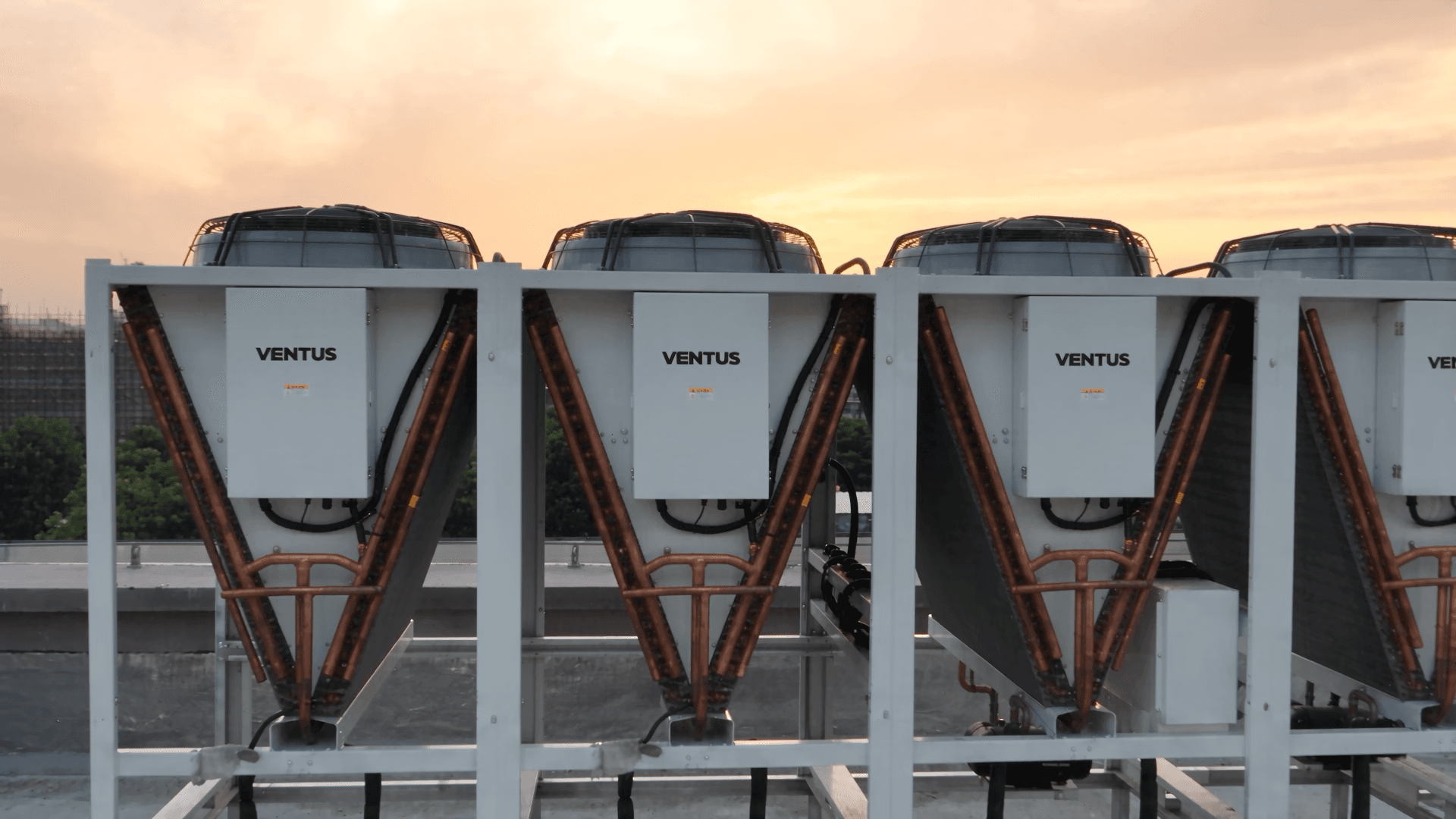
Telecom & distributed infrastructure cooling
VENTUS Smart Free Cooling maximizes energy efficiency by minimizing compressor runtime whenever operating conditions allow.
Deployments
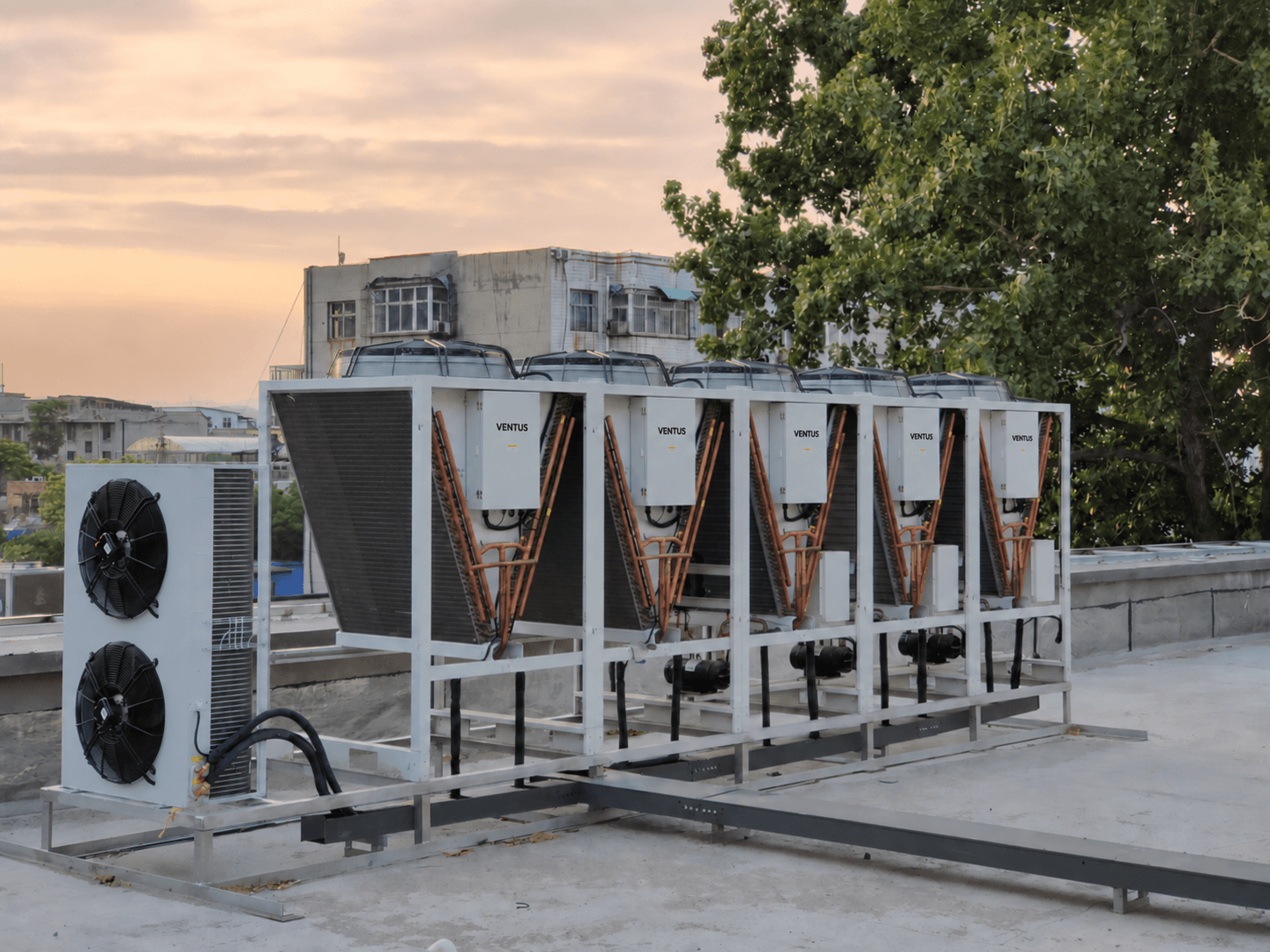
Documented VENTUS installations at 143 telecom sites across 16 provinces and metropolitan cities, from Seoul equipment rooms to Jeju base stations.
South Korea
Hover a marker for site photos
Hover a marker
Photos, products and installation dates for each site appear here.
Documented sites only. Not a complete delivery list.
Latest installations
Swipe or use the arrows to browse recent sites.
Applications
From base stations and equipment rooms to edge infrastructure and modernization projects, VENTUS supports continuous 24/7 cooling with lower energy demand.
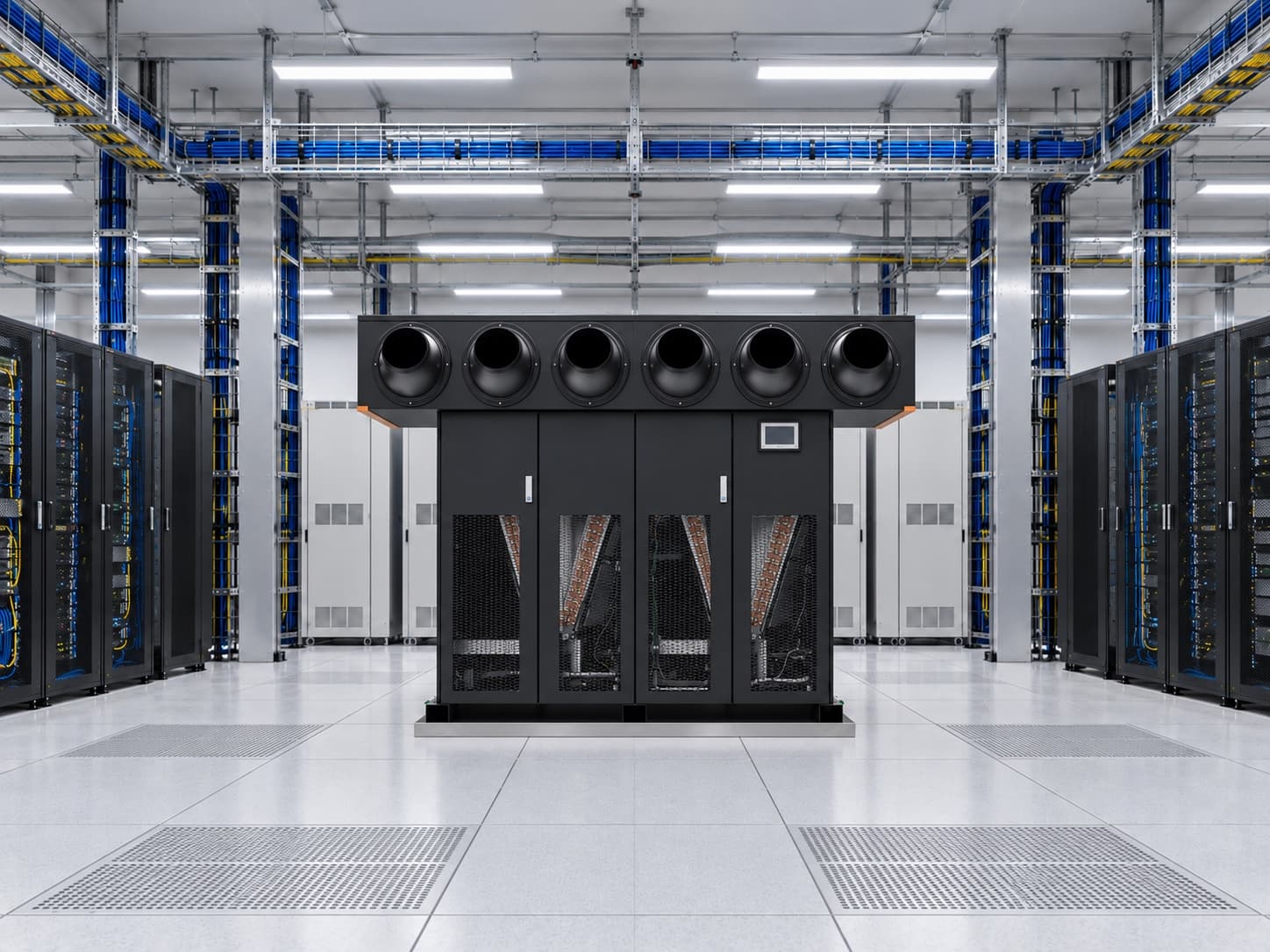
Continuous cooling for base stations and remote telecom rooms.

Stable temperatures for thermally sensitive telecom equipment.

Compact technical spaces with rapidly changing load and ambient conditions.

Replacement of aging HVAC systems and reduction of cooling power.

Engineered for each site
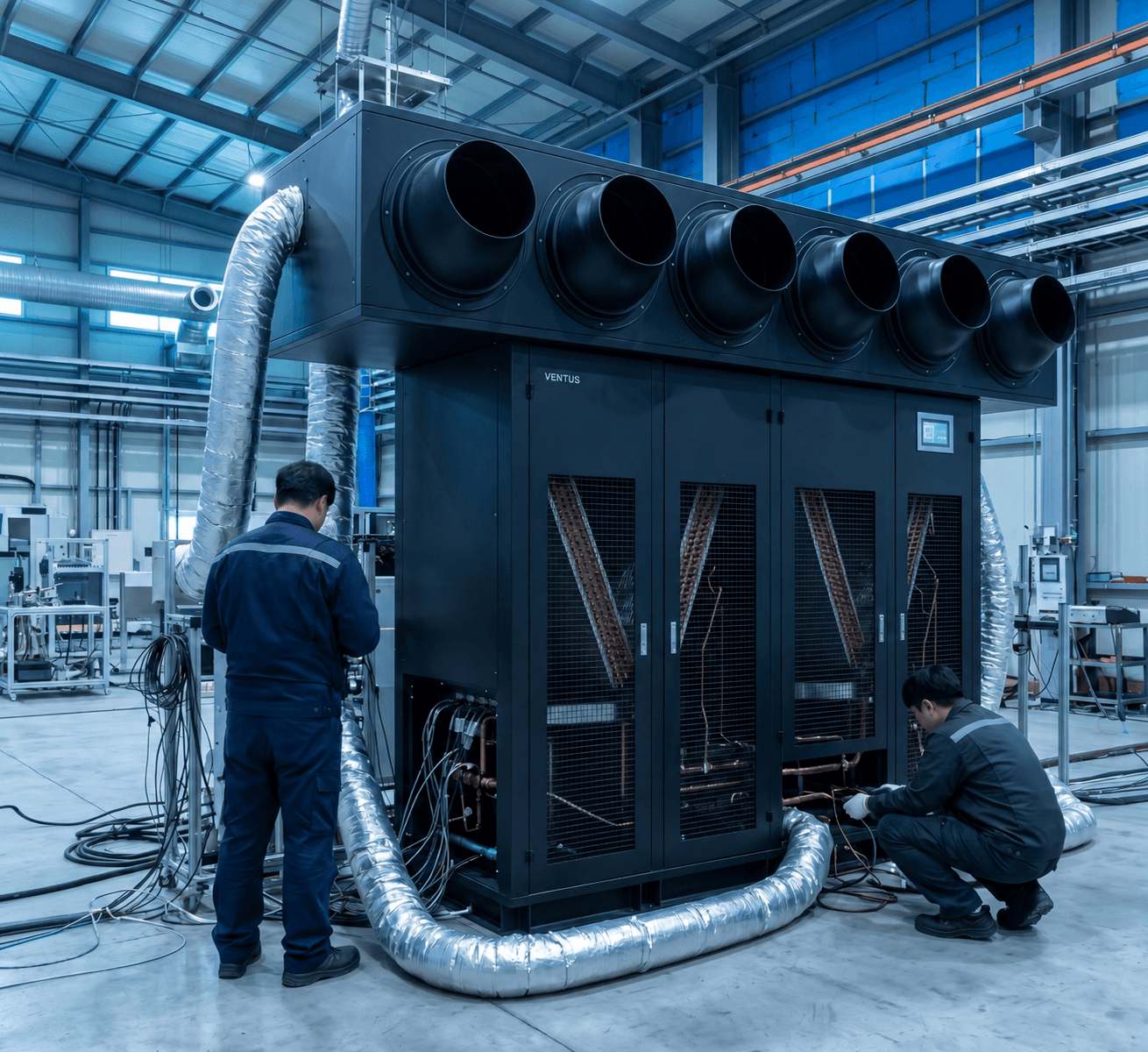
VENTUS can adapt mounting, airflow, equipment layout, and enclosure interfaces for nonstandard installations, including container mounted applications. Final scope is confirmed through engineering review.
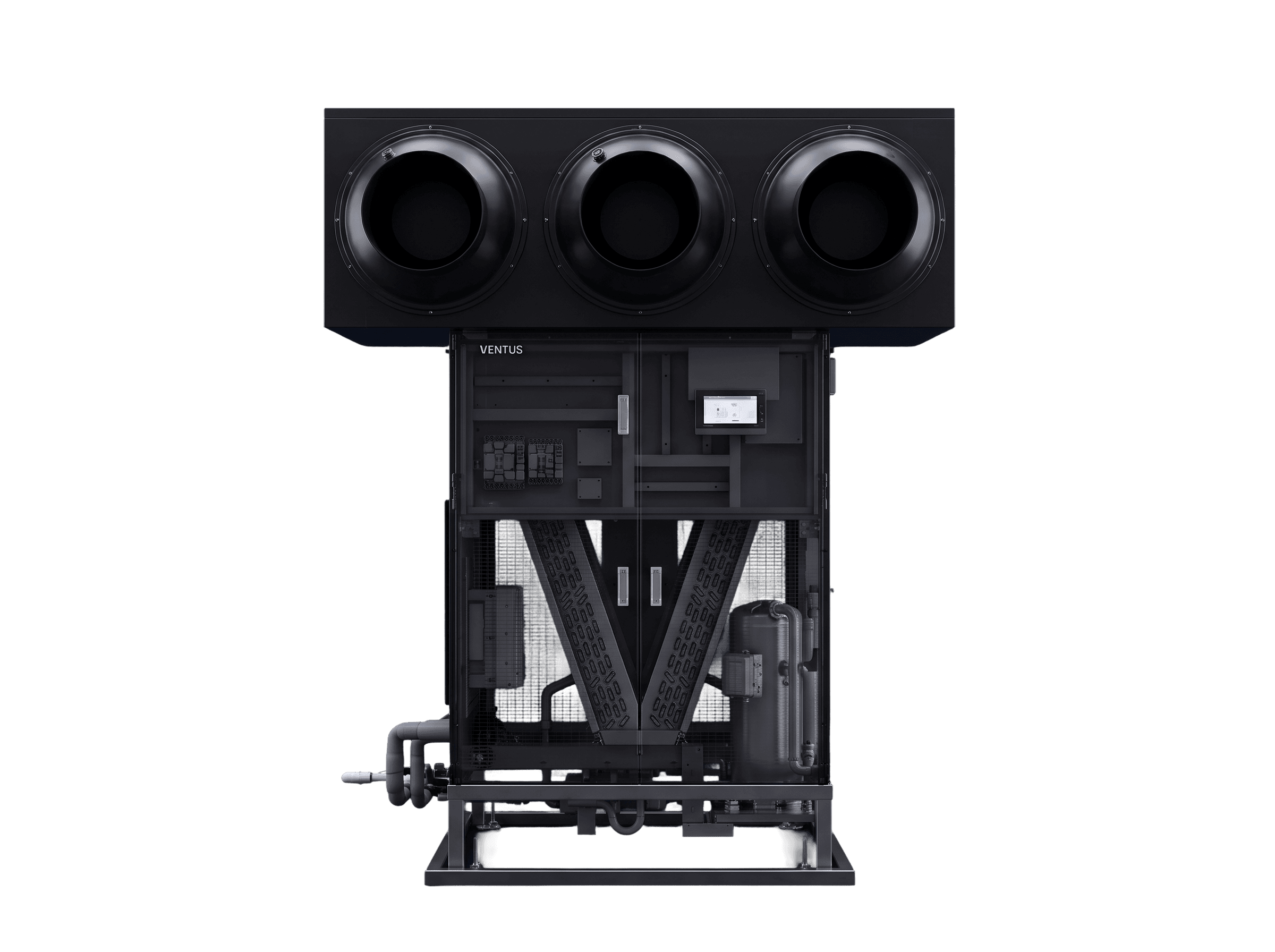
Example configuration

Technology
Smart Free Cooling precisely adjusts operation in real time based on outdoor temperature and cooling load. It is the VENTUS technology that cuts unnecessary compressor runtime and energy use to dramatically reduce annual energy consumption.
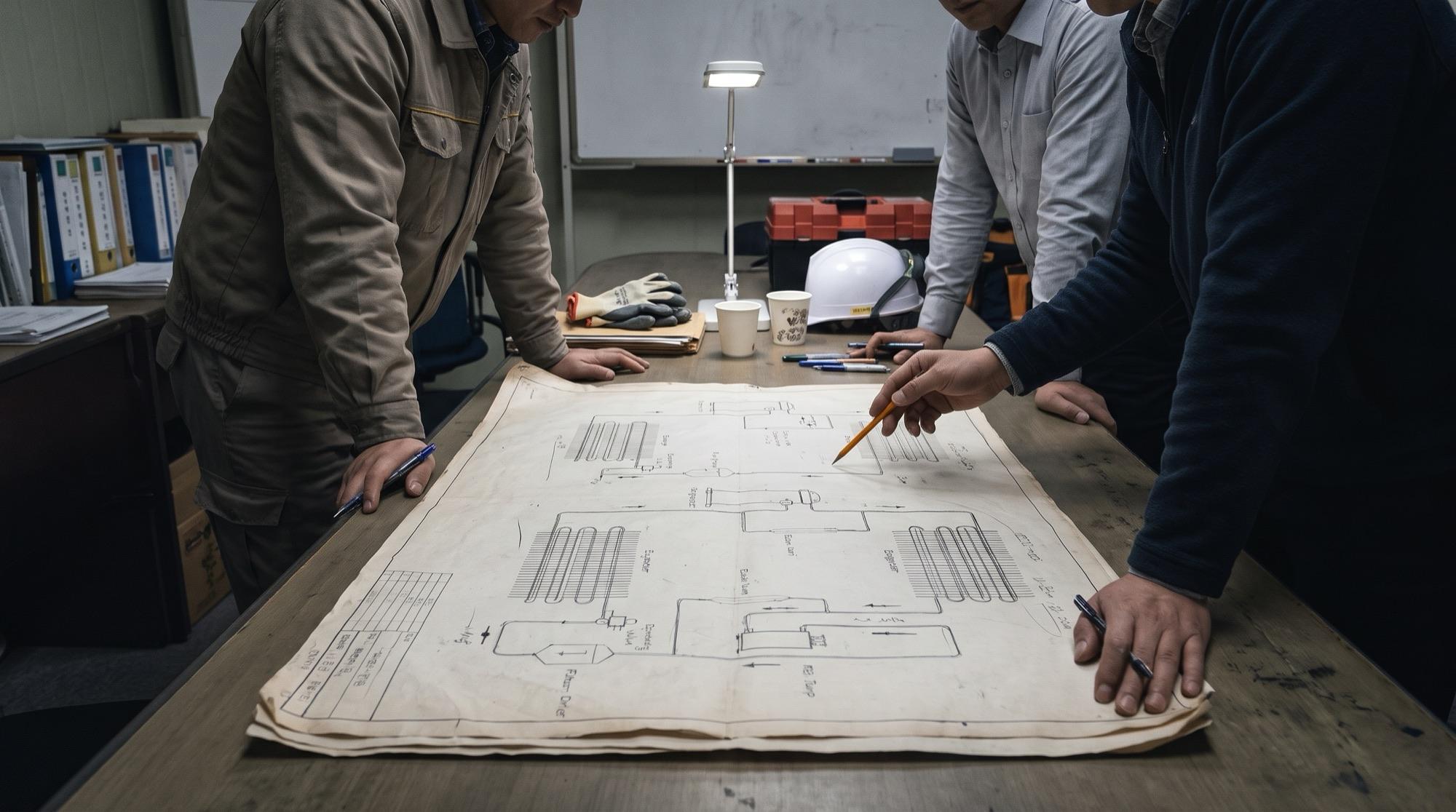
Configuration image based on SFC technical drawings.
≤46°F (8°C)
At low outdoor temperatures, the system relies primarily on the refrigerant pump to minimize compressor runtime and reduce energy consumption.
46–68°F (8–20°C)
The refrigerant pump and compressor work together to reduce unnecessary operation at full output and improve overall system efficiency.
>68°F (20°C)
At high outdoor temperatures or under heavy thermal loads, the compressor provides the cooling capacity required to maintain stable cooling performance.
35 registered patents in Korea, the U.S., China and Japan, including the cooling apparatus and its control method.
Performance
Efficiency rises as outdoor temperature falls, reaching 88.6 Btu/Wh at 37.4°F and 50% load.
At 100% load, efficiency is 4.5× higher at 37.4°F than at 95°F.
Smart Free Cooling turns the compressor off in free cooling mode and draws power only for the refrigerant pump, so it records an EER that cannot be compared with the ratings of compressor-based systems.
95°F · 100% load
10.9Btu/Wh
111,800 Btu/h cooling
10.296 kW input
Compressor active
37.4°F · 100% load
49.0Btu/Wh
108,200 Btu/h cooling
2.207 kW input
Free cooling
37.4°F · 50% load
88.6Btu/Wh
62,100 Btu/h cooling
0.703 kW input
Free cooling
Tested by a CNAS-accredited (ILAC-MRA) laboratory under KT supervision, report no. 202510-RD-001. Outdoor-unit sound held to 69 dBA or less.
Full- and partial-load tests run on a refrigerant piping length that reflects field conditions.
Measured with no manual intervention, reflecting real operating behavior.
10RT (35.2 kW) unit at a 70.2% annual average load
Test conditionsIndoor ≈81°F dry bulb · Outdoor 95–37.4°F · 100% / 50% load · 98.4 ft (30 m) piping · Values averaged over 35 minutes after stabilization
Estimated, but not a rough guess: the efficiency gap between the two systems is measured.The starting point is the K-HVAC report (AR-25-281, manual mode), measured at an accredited test laboratory, which compares a conventional inverter-type DX unit and VENTUS Smart Free Cooling at 37°F, 54°F and 95°F outdoor temperature and 100% load. That annual comparison was originally run on Korean weather. We kept the measured efficiency difference at each temperature and changed only the weather, using five years of hourly Los Angeles (LAX) temperatures, 2020–2024 (NOAA / NSRDB), with values between test points interpolated. Only the weather is estimated, which is why we call the result an estimate. Same method: San Jose −54%, New York −51%, Washington, DC −50%. Reference: a conventional inverter-type (variable-speed compressor) 10RT DX air conditioner.
Notes
Unit conversion: 1 kW = 3,412 Btu/h; 1 W/W = 3.412 Btu/Wh. Converted values are provided for unit comparison only and are not AHRI 390 certified ratings. Results apply to the tested sample under the stated conditions.
Company
From prototype and base-station field trials with SKT to certification by KT and SKT, nationwide deployment, and the continued advancement of Smart Free Cooling, VENTUS brings decades of proven telecom cooling experience.
SKT prototype testingThree rounds of base-station field trials2003 certification and pilot deployment
2003–2009 · 3,355 units supplied to SKT2011 · KT certification2012–2018 · Expanded supply to both carriers
2018 · Transition to Smart Free Cooling2019 · SFC 1.0 certified by KTSFC 2.0 · KT in 2024 · SKT in 2025
May 2026 · SKT 116 units · KT 66 unitsR-454B applied (2026 target)AI operating platform in active development
Under the U.S. EPA’s AIM Act rules, refrigerants in new data-center and IT-equipment cooling systems are limited to 700 GWP from January 1, 2027. Ahead of that change, VENTUS set a 2026 target for a wholesale move to a next-generation refrigerant, and the switch to R-454B (GWP about 466, A2L class) is already complete. It is engineered to keep performance comparable to R-410A in the same physical footprint. R-410A models remain available for now.
About the AIM Act: the American Innovation and Manufacturing Act is a U.S. federal law enacted in December 2020. It does two things. First, it phases down the production and import of HFC refrigerants by 85% from the baseline by 2036. Second, under the EPA’s Technology Transitions rule, it sets a global warming potential (GWP) ceiling for refrigerants in new equipment, sector by sector. For data centers, IT-equipment facilities and computer-room cooling, that ceiling is 700 GWP from January 1, 2027. R-410A has a GWP of about 2,088, and R-454B about 466. The rules can be amended, so check the latest EPA notices.
VENTUS is actively building AI into Smart Free Cooling. The goal is a system that picks its operating mode by itself from weather and load, and coordinates compressor, fans and valves to use less power for the same cooling. It will trace faults to their root cause, warn before a part needs replacing, recover from minor faults without a technician visit, and keep learning from each site’s own operating data. Every decision is shown with its reasons, and if the AI or communications fail, the system returns to conventional operation so cooling never stops. These are features under development, not released product performance.
Products
Explore cooling capacities, system types, and airflow configurations designed for different installation requirements.
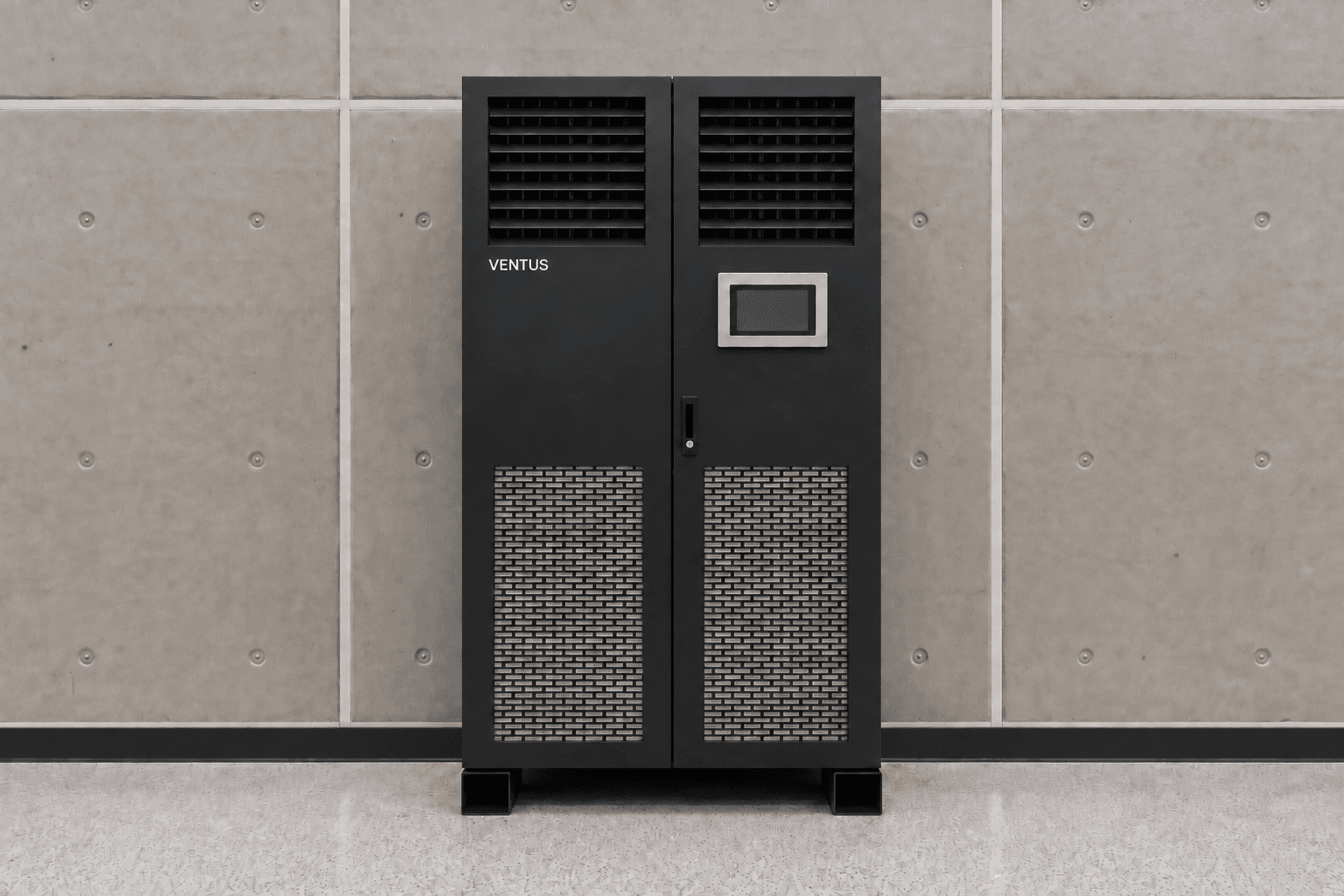
Direct expansion (DX)
Water cooled
Direct expansion
17.6 kW5 tons
Hover to view products
Contact
A product question, a technical doubt, or a site you are still evaluating. Send it in whatever form it comes. A one-line question is enough to start.
Or write to the right team directly
Models, capacities and general product questions
sales@ventus-i.comDesign, performance, installation and FAQ
support@ventus-i.comProduct catalog, spec sheets and brochure
sales@ventus-i.comUser manuals and installation manuals
support@ventus-i.comAnything else is welcome too. Our customer support team will point you to the right person.